
autumn leaves
and winter-flowering camellias
coexist in my garden . . .
freesias are budding
today it feels like spring
Julie Thorndyke
autumn leaves
and winter-flowering camellias
coexist in my garden . . .
freesias are budding
today it feels like spring
Julie Thorndyke
the solstice
steals into my calendar
too soon
the turning of the year
hastens our time of parting
Julie Thorndyke

one-by-one
bright beads on the abacus
are slid home—
the changing pattern
of my daughter’s bookshelves
Julie Thorndyke
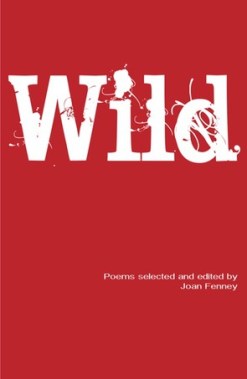
So pleased to be one of the 159 poets from across Australia whose work was chosen to be in this anniversary anthology from Ginninderra Press.
It promises to be an exhilarating and often surprising foray into the many facets of ‘wild’ — human, animal, environmental and metaphorical.
http://www.ginninderrapress.com.au/wild.html
More information about the anthology here: Wild

tears roll
as pearls spilled
from a string—
an indigo sky
flashed with lightning
well-rounded vowels
of alto melody
ascending—
swaddled in a shawl
of homemade lullabies
silver-topped
milk bottles dotted
with dew—
winter breakfasts
sunlit with sugar grains
even white loops
of baby-yarn slide
on tortoiseshell needles
pale cakes rising
in the gas oven
a child wakes
to the sound of dishes
and quiet footsteps—
morning hymns
on the wireless
Julie Thorndyke

September gone
and another birthday
I pause
before turning the fourth
corner of the year
these book-lined walls
all thought, every emotion
contained
on my calendar I schedule
a day to run free
last day of term
locking the library door
on silence
I check myself out
for a long, long loan
Julie Thorndyke
(Tanka Splendor Winner 2006)

A String of Christmas Memories by the Tanka Huddle 2017
granny and me
stirring dried fruits
and brandy . . .
one nip for gran
one for the pud
Marilyn Humbert
at the mall
for photos with santa—
I yearn
for a star-filled night
and choirs of angels
Jan Foster
it’s forty degrees
and mum’s had enough
christmas
crackers snap
around the table
Carolyn Eldridge-Alfonzetti
christmas
meant rum and plum cake
childhood memory
of our annual trip
to Cochin bakery
Rugmini Venkatraman
christmas eve
we toss and turn
quiet . . .
mum fills the stockings
we pretend to sleep
Karen Lieversz
reindeer puppets
pranced on polystyrene snow
but the tug
on my heart-strings
was absolutely real
Julie Thorndyke
green icing
on the christmas cake
and a frill
make all the difference—
mum comes home this year
Laura Davis
sunshine and sleigh bells
holly and magpie song
carols under stars
the customs learned in childhood
swim united in my mind
Beverley George
broken nails
and roughened hands
massaged
by the sweet balm
of a christmas-ready house
Anne Benjamin
three-penny
and six-penny pieces
stored all year
polished up in time for us
to polish up the pud
Carmel Summers
[Copyright of each individual tanka remains with the poets.]

Congratulations to Interactive Press on their 20th year anniversary and anthology,
Just off Message!
Thank you to editor David Reiter for including some poetry of mine in this celebratory book.
As he writes on the IP website, it is important to remember that “independent publishing houses like IP are, and always will be, an essential part of the cultural landscape” offering opportunities to local and emerging writers.
I’m looking forward to reading the work of all the contributing writers.
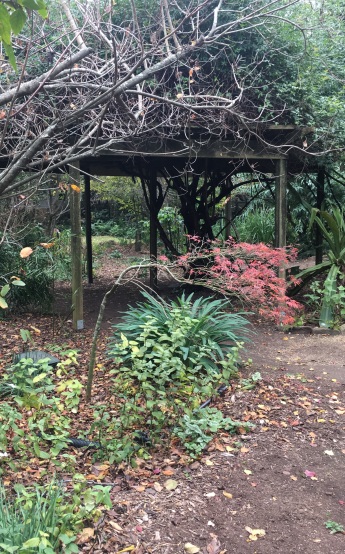
It was a wabi-sabi sort of day last weekend, when I met with poetry friends for a garden ginko. We took some time to slow down, walk around a winter garden, and notice the textures of foliage, stone and wood.
Camellias, jonquils, and other rarer blooms we couldn’t name were there for the keen-eyed poet to discover.
In these moments of reflection, we may have also learnt something about ourselves.
stone tubs
that once held the weekly wash
now cradle spring bulbs
. . . each day I find
a new skill to master
© Julie Thorndyke

Another poet asked me recently how long I’d been writing tanka, and I was lost for words, because it seems like I’ve been writing these little five line verses for ever. I did remember that my discovery of tanka gelled with the toddler-hood of my daughter, the years following my father’s death and also the process I underwent in allowing myself to know that I was a writer, after many years thinking I was somehow locked out of that magic circle.
I went hunting through my journal collection for dates, the early poems. The answers of course were in Yellow Moon. Like many poets, both in Australia and overseas, I found Yellow Moon a terrific vehicle for learning. I still remember my bewilderment at the unfamiliar names of short Japanese poetry forms the first time Beverley George put an issue of the journal in my hands, sometime in 2003. Don’t worry, she assured me. You’ll soon catch on.
I did catch on, labouring over early drafts of haiku which Beverley corrected and critiqued for me, mostly over email. Some of these haiku can be found in Yellow Moon 16, Summer 2004:
eucalypt forest—
the child’s lifted arms
wanting home
the tilt
of your chin
looking at stars
I didn’t linger with haiku for very long. These days it is a real struggle to think in only three lines. But these early attempts at haiku indicate quite clearly what was to be a major theme in my tanka: my family in the Australian landscape.
I wrote my first tanka in a workshop at the local Fellowship of Australian Writers, one quiet Saturday afternoon, from a first line writing prompt Beverley provided:
I didn’t know rain
could sound so lonely
10 am
and you won’t be home
for three more days
I was hooked.
That first poem was published in the UK in Tangled Hair. I succeeded in getting a tanka placed in Yellow Moon 17, and this one followed in 18 Winter 2005:
as for me, I am
content to live quietly—
as the rain
drips into small puddles
and glints in the sun
It was a personal sort of poem and I nearly didn’t send it. But the acceptance of this poem, that reflects very much the meditative mood of the poet, somehow freed me to be myself in tanka. After that I never looked back.
There is something about the honesty of tanka, the ability to suggest a complete back-story in five lines, and the emotional freedom to say something real, that I find irresistible. No other poetry form provides such a swift journey from image to understanding. The container of the poem provides a discipline to work against, and the struggle to contain the thought in five lines results in a poem that is concise and uncluttered. For a long time I counted syllables on my fingers, but the day came when, scribbling in my journal, I knew that the shape and rhythm of tanka was written on my heart, because I did not need to check the syllable count anymore.
I like the way tanka looks on the page: so much like free verse yet with a subtle envelope shaping the words. I like the clean, direct, un-poetic English that uses everyday words and avoids cliché. I like the unexpected, the real, the sensory. I like the subtle way repetitive sounds and allusions creep unbidden into my tanka and make the words poetry without my knowing it. I like the freedom it gives me to take a leap into the poetic dark.
Eucalypt has been a great joy to read, and I was proud to be one of the Australians in the first issue. Tanka editors everywhere have been most kind and encouraging to me.
I have also been very fortunate to link up with a wonderful, international group of tanka poets who critique poems on a monthly basis by email (I won’t embarrass any of them here.) There is also a growing community of tanka poets in Australia, and I am fortunate to meet monthly with a lively group of them to share poems, learn form each other, and critique our work. Being part of this community of poets has, for me, been one of the most rewarding aspects of tanka writing.
pouring my thoughts
into this tanka mould—
those mud pies
we made together
in rusty cake tins
Toward the end of 2007, I realised I had a large number of tanka, many of them published in journals, some unpublished, that I could gather into a collection. This was a kind of a marker of my development as a tanka poet. As I went through the process of gathering and arranging, I could see how my poems had changed over time. I held back from adding the newest work, which seemed different, less personal perhaps, and ranged into other subject areas, probably reflecting the influence of poets I met in my university courses. Ginninderra Press published my first tanka collection in book form in 2008 under the title rick rack.
In 2009 I completed my studies in the Master of Creative Writing programme at the University of Sydney. I studied poetry as well as prose and gained the confidence to call myself a writer. I think my newer tanka reflect this development as a poet, as my imagination roams into new possibilities and discovers new rooms in my writer’s house. But I do not think I would have arrived at this point of confidence in writing without tanka.
The tanka form has become an integral part of my life.
When I jot down ideas in my notebook they automatically arrive on the page in a tanka shape. Whether they remain in five lines or are padded out into prose depends largely on the task at hand. But one thing is certain: the easy way these five lines can incorporate a thought, or an emotion, that springs effortlessly from the most common everyday image, is a magic I never want to do without.
they continue
to spill sand, these shells
lined up on my desk
…so many words
fall from my heart
© Julie Thorndyke
First published in Ribbons Volume 5 Number 4 Winter 2009 pp 39-41
 Julie Anne Thorndyke